
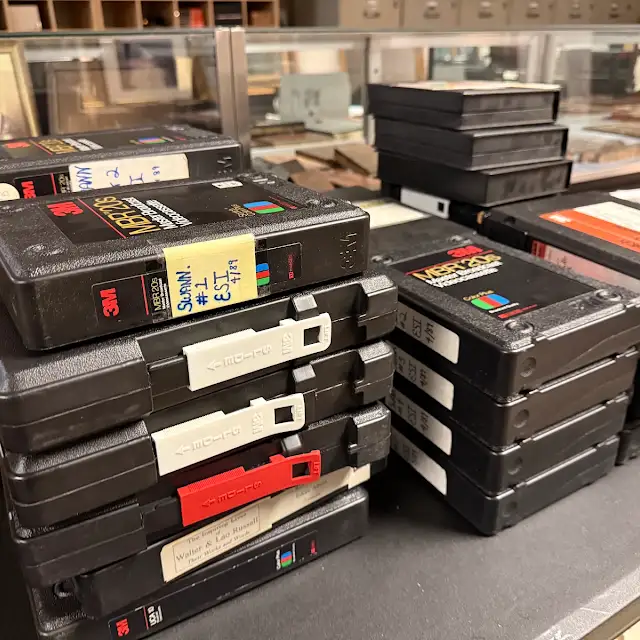
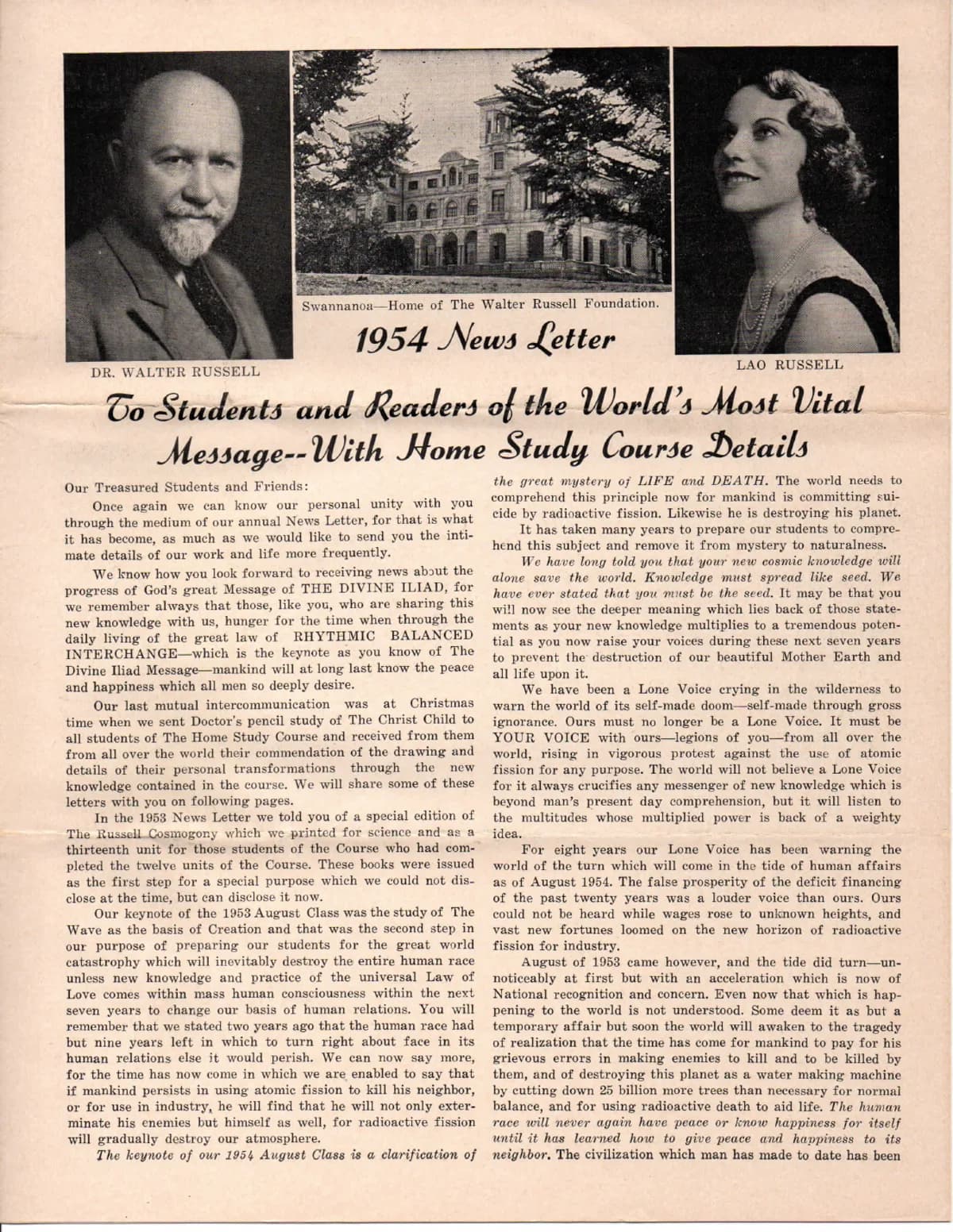
- Foundation at Swannanoa
Walter and Lao Russell establish the Walter Russell Foundation.
- USP charter
The Foundation receives its Virginia charter and becomes the University of Science and Philosophy.
- The Russell Museum
USP opens its Waynesboro headquarters.
- The Lost Archives
Rare USP recordings begin a new public life on 19 May.
Preserved before it was published.
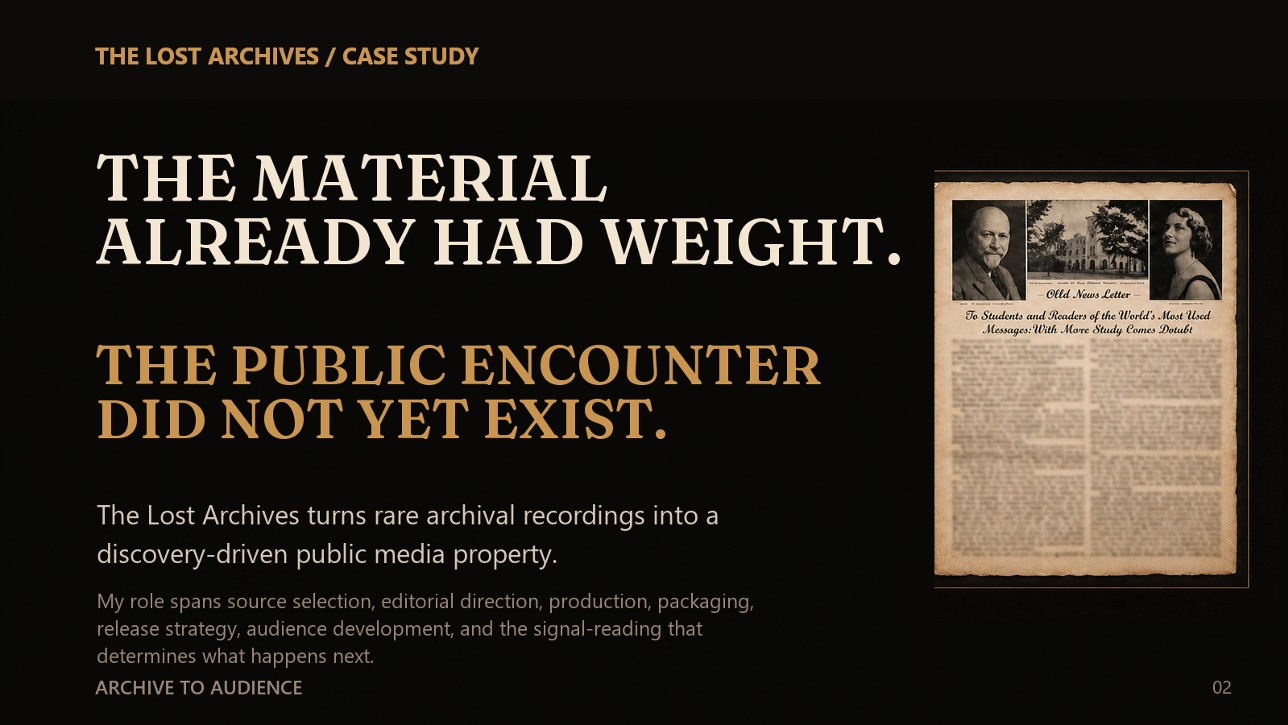
The University of Science and Philosophy preserved the books, charts, artworks, photographs, recordings, and context that make this work possible. Archive to Audience designed the public path around them.
A public system, built end to end.
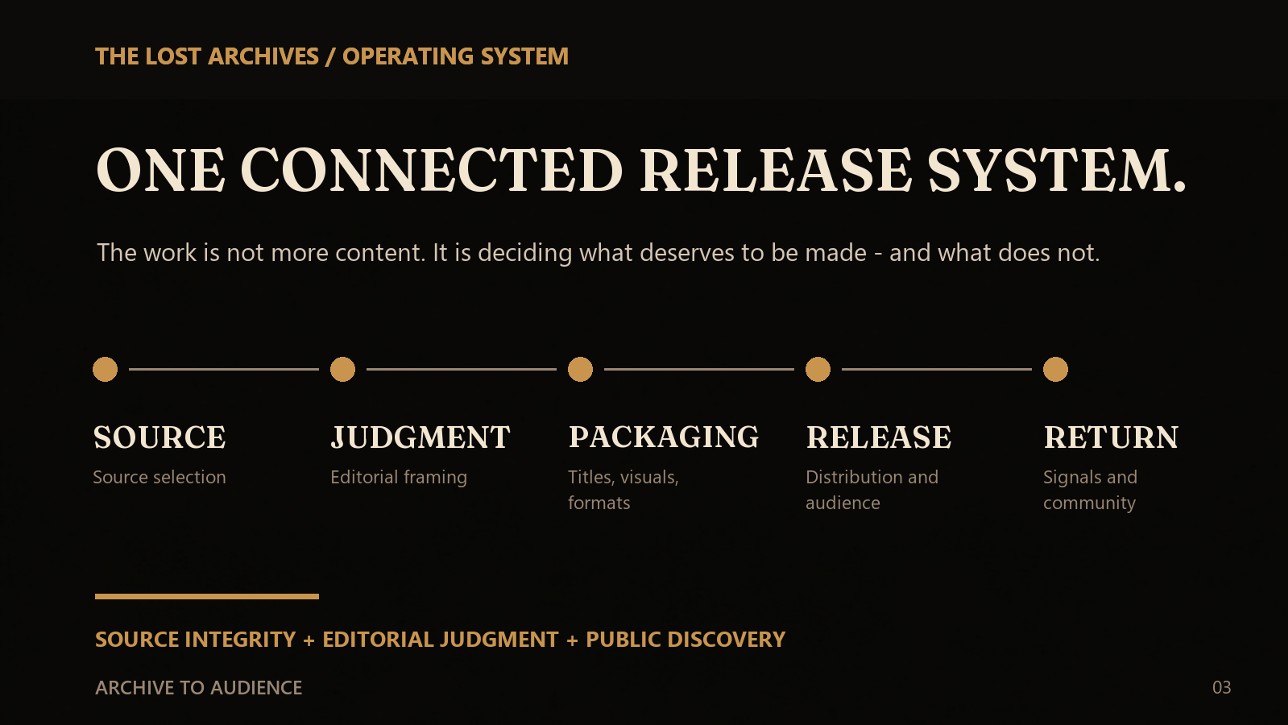
Editorial judgment, production, distribution, and owned destinations worked together—so every release had somewhere to lead.
Editorial + production
Selected source material, shaped the series, and produced long- and short-form releases.
Packaging + distribution
Built the release rhythm across public platforms and used performance signals to guide the next decision.
TheLostArchives.org
Designed and built the public website as the bridge from a first view to episodes, source context, and a clear next step.
Mighty Networks study spaces
Built member sections with additional study materials, giving people a place to continue beyond the episode.
Published proof
The case, in five pages.
The result
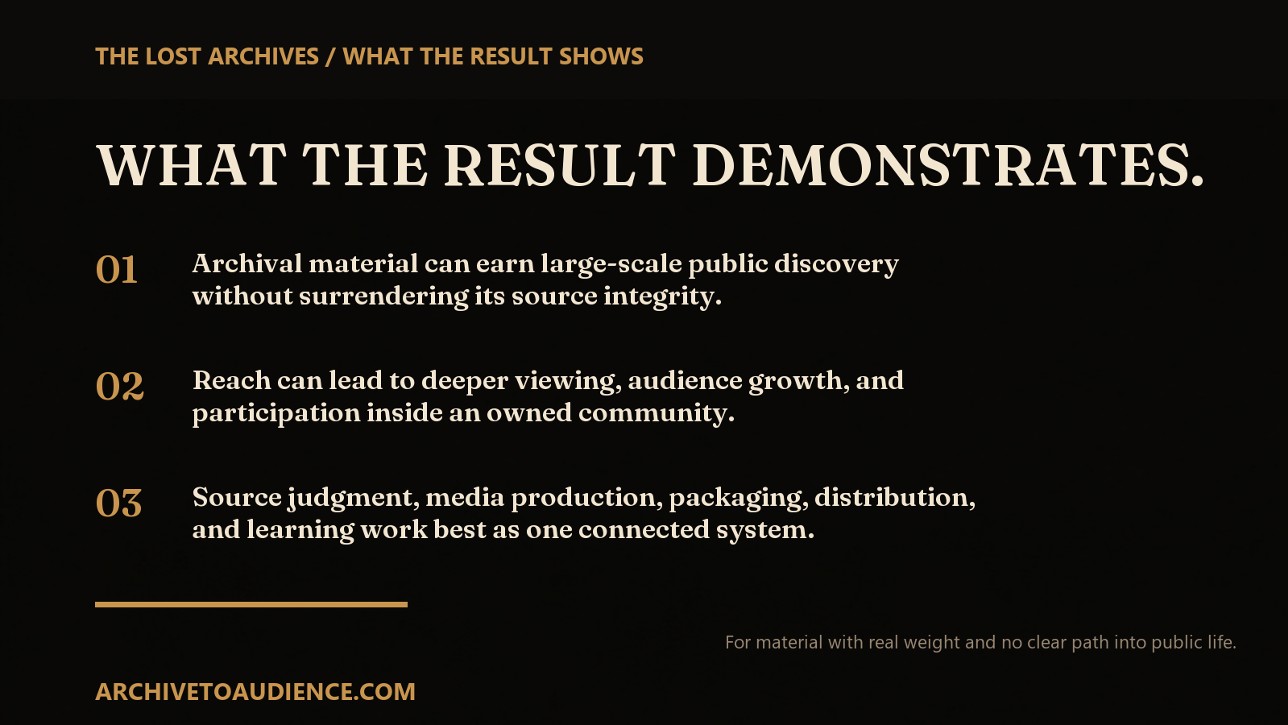
Discovery led somewhere deeper.
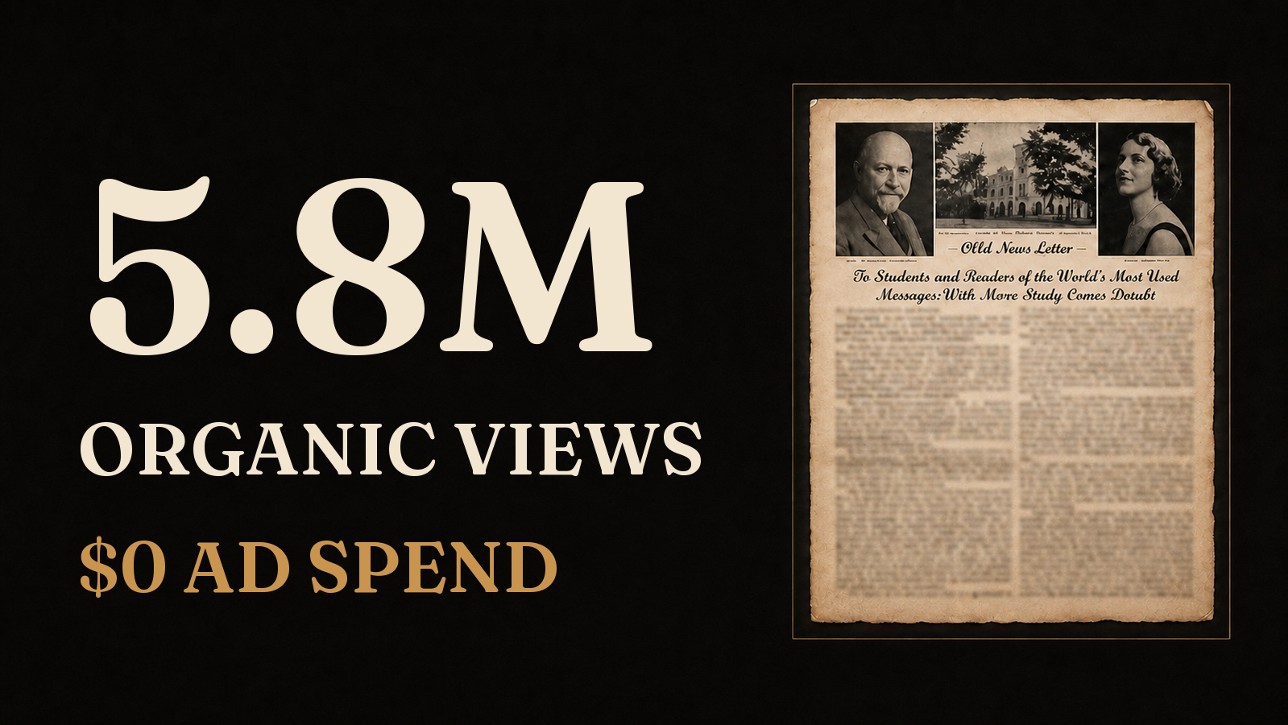
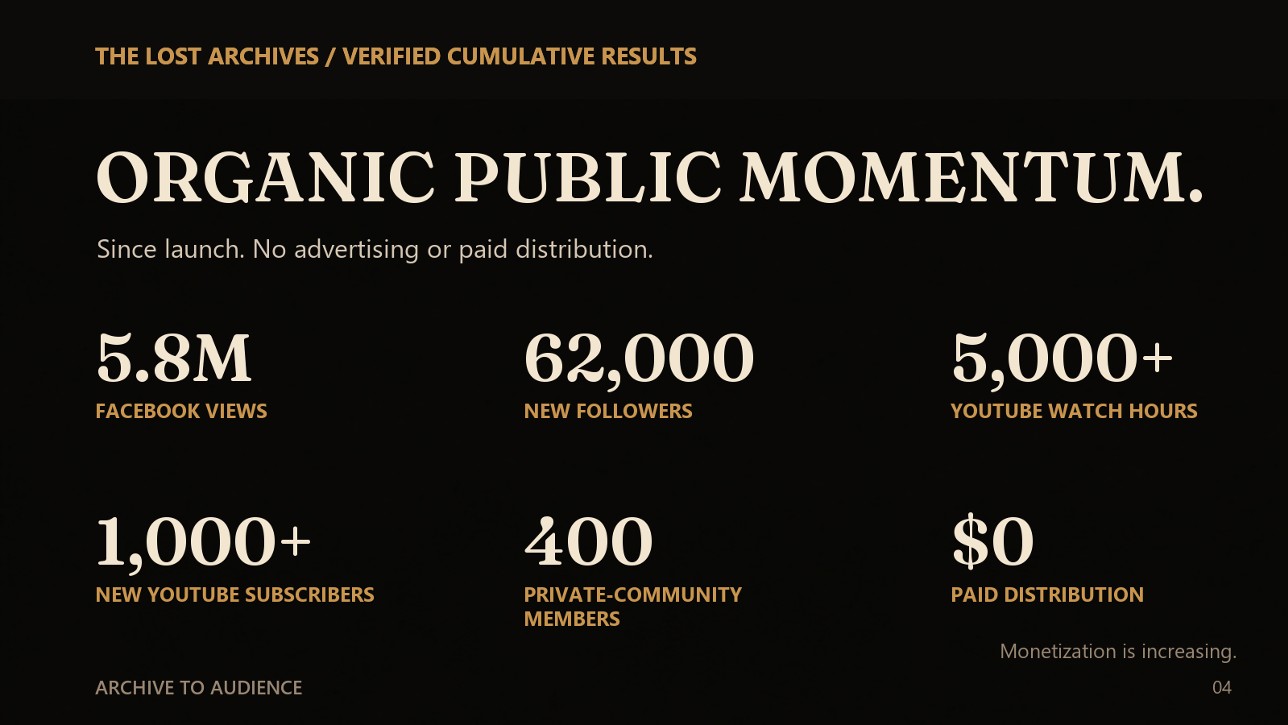
A preserved archive gained public discovery, deeper viewing, a dedicated website, and an owned member pathway—all without advertising spend.
Rounded cumulative figures from USP / Lost Archives operating records, current as of 22 August 2026. All reported growth was organic; no ads were run, and advertising spend was $0.